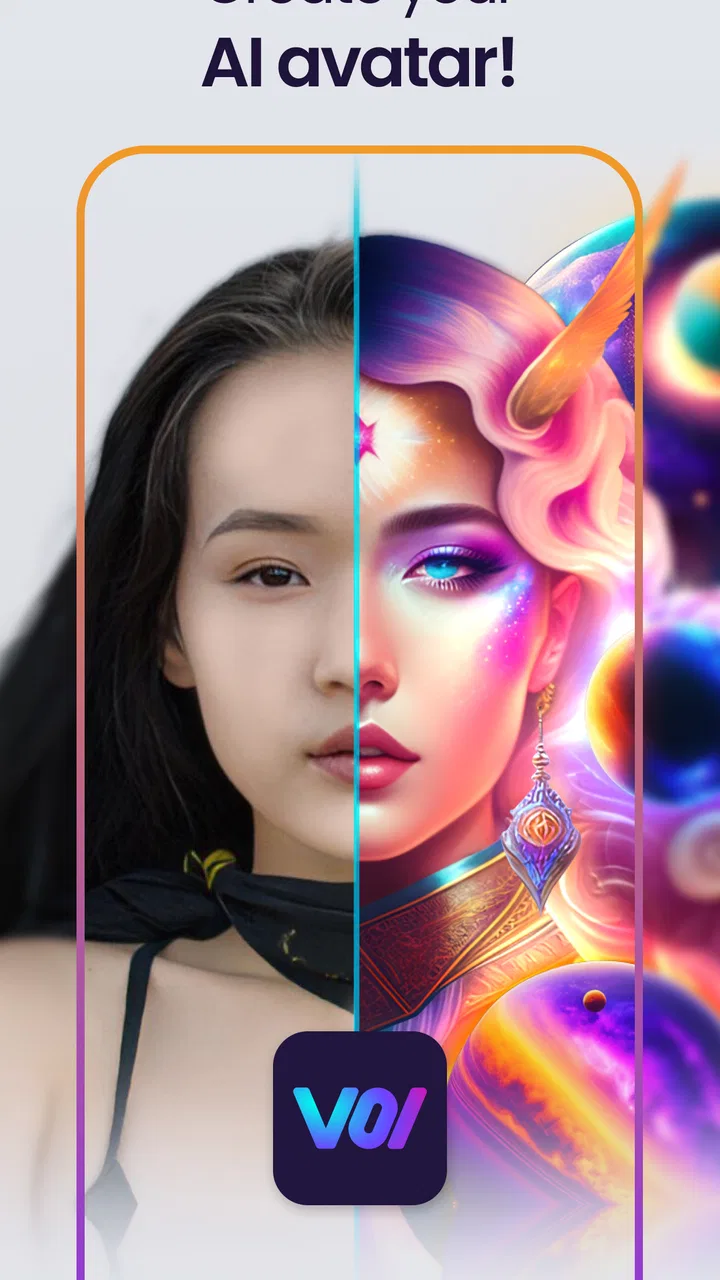
Voi - AI Avatar Portrait Maker
- 2.1
- Rating
- 1.00M
- Installs
- Free
- Price

 Analysis by App-foxy
I tried Voi - AI Avatar Portrait Maker as the kind of app you open when an ordinary profile photo feels a little too ordinary. It belongs to the Art & Design category, comes from Holypic, and focuses on turning selfies and other photos into stylized avatar portraits. The first impression is easy to understand: choose an image, explore an AI-generated look, and decide whether the result feels more interesting than the original.
That simple appeal is real, but it also raises the question that matters more than the first download: does Voi remain useful after the novelty of seeing your face in a new style wears off? My experience is that it can be enjoyable for occasional profile refreshes and playful social images, yet it is less convincing as a daily creative tool. The difference comes down to how often you actually need a new portrait and how much control you expect over the final image.
From first-week curiosity to lasting usefulness
I see the first week as a useful test of whether Voi suits your habits, not just whether its portraits are entertaining. In this section, I’d look at how an occasional profile refresh can turn into a practical reason to return, especially when you have different audiences or image sizes to consider. The more important question is what changes once that first burst of curiosity has passed.
You May Also Like

 Blood Strike: 2.5 Anniversary
Blood Strike’s Loadouts Turn Every Drop Into a Tactical Gamble
A close look at Blood Strike’s custom loadouts: how fast access to signature weapons reshapes its battle royale rhythm, rewards preparation, and narrows the gap between fights.

 Pandora - Music & Podcasts
Pandora’s Music Is Easy to Start, but Harder to Recover
Pandora’s strength is its low-effort path from a seed to a station. Its weak spot is how much confidence it asks you to place in connection, setup, and quiet recovery.

 8 Ball Pool
 Is Built on Rivalries, Rematches, and Routine
A close look at the rivalries, rematches, shared routines, and unanswered safety questions that turn a quick pool match into a persistent mobile community.

 Samsung Music
’s Quiet Strength Is Playing What You Already Own
Its reach comes less from spectacle than from dependable access to a personal library. That simplicity is both the app’s strongest retention engine and its ceiling.

 AccuWeather: Weather Radar
AccuWeather Review: A Quick, Clear Forecast for Everyday Decisions
For everyday plans, the best forecast is the one you can understand quickly. AccuWeather makes rain timing, radar, and local conditions easy to act on, with a few trade-offs.

 Hill Climb Racing
Why Hill Climb Racing Still Turns Crashes Into One More Run
A tiny car, a bumpy hill and one more upgrade: Hill Climb Racing keeps resurfacing because its simple chaos makes every near-miss feel personal.
More From Our News Desk



The opening experience is built around quick visual payoff
During the first week, an app like this has a natural advantage. A selfie is familiar, while an AI-styled portrait makes it feel new again. That transformation gives Voi an immediate reason to exist, especially for someone who wants a profile picture that looks more deliberate without spending time learning a full design editor.
I found the concept most appealing when I treated it as a source of ideas rather than a replacement for photography. A normal portrait can communicate who I am, but an illustrated or AI-interpreted version can suggest a mood: playful, polished, dramatic, or more artistic. That makes the app useful for experimenting before choosing an image for a messaging account, social profile, community page, or casual creative project.
The free entry point helps with that first experiment. Voi is free to install and is rated for Everyone, so it is approachable for a broad audience. There are in-app purchases ranging from $2.99 to $29.99 per item, which makes it important to pay attention before treating every available style or result as part of the no-cost experience. I would begin with the free path and only consider spending after deciding whether the visual quality suits my taste.
The app has attracted over a million installs, so the basic idea clearly has broad appeal. At the same time, its average rating of 2.1 from around 11 thousand ratings is a meaningful warning sign. I would not read that number as proof that every person will have a poor experience, but I would take it as a reason to keep expectations measured. AI portrait apps can look impressive in a preview and still disappoint when the face, hair, expression, or overall resemblance is not handled well.
The photo you start with matters more than most people expect
One of my strongest practical observations is that the input image does much of the creative work. A clear, front-facing selfie with a recognizable expression gives the system a better foundation than a dark group photo, a heavily cropped image, or a picture where the face is partly hidden. This is not a minor preparation step. Choosing the right source photo can make the difference between an avatar that feels like me and one that merely has a vague resemblance.
I would prepare several different source images before judging the app. A relaxed expression may produce a more natural portrait, while a stronger pose may work better for a dramatic style. It is also worth keeping the original image untouched so that the generated version can be compared fairly. Without that comparison, it is easy to mistake extra color or decoration for a genuinely better portrait.
Another useful workflow is to decide the job of the image before generating it. A square profile picture needs a face that remains readable when displayed small. A larger social post can tolerate more background detail. If I am making an avatar for a professional-looking account, I prefer a restrained result over one that adds so much visual treatment that the person disappears. If the purpose is simply to share something amusing with friends, accuracy becomes less important than personality.
Where it fits beside ordinary alternatives
Compared with a standard camera app, Voi is better at creating a distinct visual identity and worse at preserving a completely natural likeness. A camera app gives me direct control over lighting, framing, and the exact moment captured. Voi is more interesting when I want interpretation rather than documentation.
Compared with a conventional photo editor, it appears more approachable for a single transformation. A traditional editor is usually the better choice when I want to adjust a specific detail, remove a distraction, control color precisely, or build a design around text and multiple images. Voi makes more sense when the main task is turning one portrait into an avatar-like image without manually constructing the effect.
Compared with drawing an avatar from scratch, the app saves time and keeps the result connected to a real face. That convenience is also its limitation: the creative direction is shaped by the available AI treatment rather than by my own brushwork. Someone who enjoys illustration and wants complete authorship may find a drawing app more satisfying, even if it takes longer.
A realistic everyday use case
Imagine changing a profile picture after joining a new online group. I might not want to upload a formal headshot, but I also do not want to use a random landscape or an old image. Voi can help me create something recognizable with a little more personality. I would choose a well-lit solo selfie, generate a few suitable variations, inspect the face at small size, and select the version that still looks like me when reduced to a profile thumbnail.
The important final step is not to choose the most spectacular result automatically. I would choose the one that remains clear, comfortable, and appropriate for the audience. An avatar that looks exciting in full-screen view may become muddy or overly stylized in a small circle. That small-size check is one of the easiest ways to avoid being impressed by an image that will not work in its actual destination.
What remains after the novelty wears off
Once the novelty fades, I’d judge Voi by whether it still solves a specific portrait-making task without adding unnecessary effort or expense. This section considers how repeated use, changing needs, and the trade-off between quick AI styling and precise editing affect its staying power. That longer view helps clarify who is likely to keep it around and who may be better served by another kind of tool.
Month-to-month value depends on changing needs
After the first week, Voi faces a tougher test. Most people do not need a new profile portrait every day. Once I have found an image I like, the immediate reason to return becomes weaker. That means the app’s long-term value is not automatic; it depends on whether I regularly update profiles, create themed images, or enjoy experimenting with different looks.
For occasional use, that may be enough. A new job, a new community, a birthday, a seasonal event, or a change in personal style can create a legitimate reason to revisit the app. It can also be useful for people who manage several online identities and want each one to have a related but distinct portrait. In those cases, Voi functions as a small creative utility that I open when a specific need appears.
For someone who rarely changes a profile picture, the value is much thinner. The initial surprise does not necessarily become a habit. I would not recommend paying for repeated access simply because the first result was entertaining. Before spending, I would ask whether I have a concrete upcoming use for more portraits or whether I am only chasing the excitement of another variation.
Maintenance is light, but creative maintenance is real
The technical maintenance burden is relatively easy to understand: the app is currently at version 2.0.6 and requires Android 7.0 or later. Keeping it updated should help ensure that the current version is the one I am using, but an update alone does not create a reason to return. The bigger maintenance task is creative: keeping track of which portrait works for which account, saving the original source photo, and avoiding a collection of near-duplicates that all serve the same purpose.
I would keep a small folder containing the original selfie and the final avatar rather than relying on memory. That makes it easier to compare future results and prevents me from repeatedly starting with an inferior crop. I would also avoid replacing a good profile image every time a new result looks slightly different. Consistency can be more valuable than constant novelty, particularly when people need to recognize me across several services.
There is another form of maintenance that deserves attention: reviewing purchases. Since individual in-app items can cost from $2.99 up to $29.99, I would treat every paid choice as a separate decision rather than assuming a small experiment will remain inexpensive. The safest approach is to explore the free experience first, identify the exact style or result that solves a real problem, and then decide whether that single purchase is worthwhile.
Why repeated use can become tiring
The main source of fatigue is repetition. Once the face is transformed into a familiar kind of AI portrait, additional versions may feel like variations on the same idea rather than genuinely new creative work. If the app does not give me enough meaningful control over the result, I can quickly move from curiosity to browsing without a clear purpose.
Another source of fatigue is the gap between expectation and resemblance. A portrait can be attractive but still fail as an avatar if it changes the features that make me recognizable. This matters more for a profile image than for a purely decorative picture. I would judge the result on two separate scales: does it look good, and does it still look like me? Voi is only successful when the answer to both questions is reasonably positive.
AI-generated portraits can also become visually interchangeable. If everyone in a social circle uses similarly polished avatar styles, the image may no longer feel personal. That does not make Voi useless, but it changes the best use. I prefer it as a starting point or occasional refresh rather than as the sole source of my online identity.
Who should use it, and who should skip it?
I think Voi is a good fit for a casual user who wants a quick artistic profile image, enjoys trying different interpretations of a selfie, and does not need detailed manual control. It is also suitable for someone who wants to test an avatar concept before investing time in a more involved design process. The Everyone age rating makes the app broadly approachable, although younger users should still make purchase decisions carefully with the adults responsible for their accounts.
I would be more cautious recommending it to a professional designer, a person who needs exact likeness, or anyone creating a consistent brand identity. Those users usually benefit from predictable editing tools, repeatable settings, and precise control over colors, proportions, and composition. A conventional editor or a custom illustration workflow is likely to be more dependable for those needs.
I would also skip it if the only goal is to improve a normal photograph. Voi is not the first tool I would choose for natural retouching, careful lighting correction, or removing a small background distraction. Its appeal is transformation, not subtle photographic cleanup. Choosing it for the wrong job can make the experience feel disappointing even when the app is doing what it was designed to do.
Questions I would settle before downloading
Is it free to try? Yes, the app itself is free, but optional purchases are part of the experience. I would not assume that every style or result is included without charge. I would explore first, then decide whether a paid item has enough practical value to justify its cost.
Will the result look exactly like the source photo? I would not count on that. The point is to create an artistic interpretation, and resemblance can vary with the source image and the chosen treatment. Anyone who needs a faithful headshot should use a normal photo workflow instead.
Can it replace a full design app? Not for me. It can supply a distinctive portrait quickly, but it is not the same as having complete control over a canvas, typography, layers, and detailed retouching. I see it as a focused portrait-making tool rather than a complete art studio.
Is it worth keeping installed permanently? That depends on how often I need new avatars. If I update online profiles regularly or enjoy returning to portrait experiments, it may earn a place on my phone. If I only wanted one image for a single account, I would save the finished result and remove the app until another genuine need appears.
My long-term verdict
Voi - AI Avatar Portrait Maker is enjoyable when I approach it with a specific purpose and realistic expectations. Its strongest quality is speed: it turns a familiar selfie into something more expressive without asking me to learn illustration software. That makes the first encounter satisfying and gives it a useful role in profile-picture refreshes, casual social sharing, and early visual experimentation.
Its weaker side appears over time. The novelty can fade quickly, AI portraits may not preserve the likeness I want, and paid items deserve careful consideration because the available purchase range is wide. The relatively low average rating also tells me to judge the app by my own results rather than assuming the concept guarantees a smooth experience.
Holypic’s app is best kept as an occasional creative tool, not something I would build a daily habit around. I would recommend trying the free experience with several carefully chosen source photos, checking every result at the size where it will actually be used, and saving only the versions that are both attractive and recognizable. If you want a quick artistic avatar and accept some unpredictability, Voi is worth a cautious try; if you need precision, natural retouching, or lasting design control, a conventional photo or illustration app is the better long-term home.
FAQs for Voi - AI Avatar Portrait Maker
01What is Voi - AI Avatar Portrait Maker, and how does it work?
Voi - AI Avatar Portrait Maker is an AI-powered photo editing app that creates stylized avatar portraits from images you upload. After selecting a suitable selfie or portrait, the app processes the picture and applies an artistic visual style, producing an avatar that can be saved or shared. Results may vary depending on lighting, facial visibility, image quality, and the chosen effect.
02Is Voi - AI Avatar Portrait Maker free to download and use?
The app may be available to download at no cost, but some avatar styles, enhanced results, or additional features can require in-app purchases or a subscription. Before confirming a payment, review the pricing, trial conditions, renewal terms, and cancellation process shown in the app store. Availability of free credits or limited features can also change through updates.
03What kind of photos should I use to get the best avatar results?
For more accurate and attractive results, use a clear, well-lit photo showing one person’s face directly toward the camera. Avoid heavy filters, sunglasses, hats, extreme angles, blurred images, and photos with several people. A neutral or natural expression generally works well. Since AI generation is not perfect, different photos may produce noticeably different facial details and artistic results.
04Does Voi protect my photos and personal information?
Before uploading personal images, check Voi’s current privacy policy and the permissions requested by the application. AI photo processing may involve sending images to remote servers, depending on how the service operates. Avoid uploading sensitive photographs or images of other people without permission. Also review account, storage, deletion, and data-retention information if privacy is an important concern.
05Can I use the avatars created with Voi for social media or commercial projects?
Avatars made with Voi can generally be suitable for personal use, such as profile pictures, messaging, or social media posts, but commercial usage may depend on the app’s license and terms of service. Check whether generated images contain restrictions, watermarks, or limitations on redistribution. You should also ensure that you own or have permission to use the original photo you upload.
Pros
- Creates polished AI portraits from a variety of uploaded selfies.
- Offers multiple avatar styles for social profiles and messaging apps.
- Simple interface makes the generation process easy for beginners.
- Useful for experimenting with different looks without a photo shoot.
- Results can provide creative inspiration for profile pictures.
Cons
- High-quality avatar generation may require a paid subscription or credits.
- Some styles can produce unnatural facial details or inconsistent features.
- Processing time may vary depending on image quality and server demand.
- Uploading personal photos raises privacy concerns for some users.
- Results may look repetitive if you use similar selfie sets repeatedly.

Voi - AI Avatar Portrait Maker
Gallery